The pup cup lands on the table, your dog's ears go up, and half the patio turns to watch the best moment of the afternoon. Cafe treats are one of the small joys of bringing a dog along. They are also the point where a lovely outing can turn into a 3 a.m. cleanup, a flare-up of an old allergy, or a call to the vet. Most cafe staff are happy to answer questions — they just don't know which ones matter to your dog. Here is what to ask, in roughly the order you should ask it.
1. What Is Actually in the Treat?
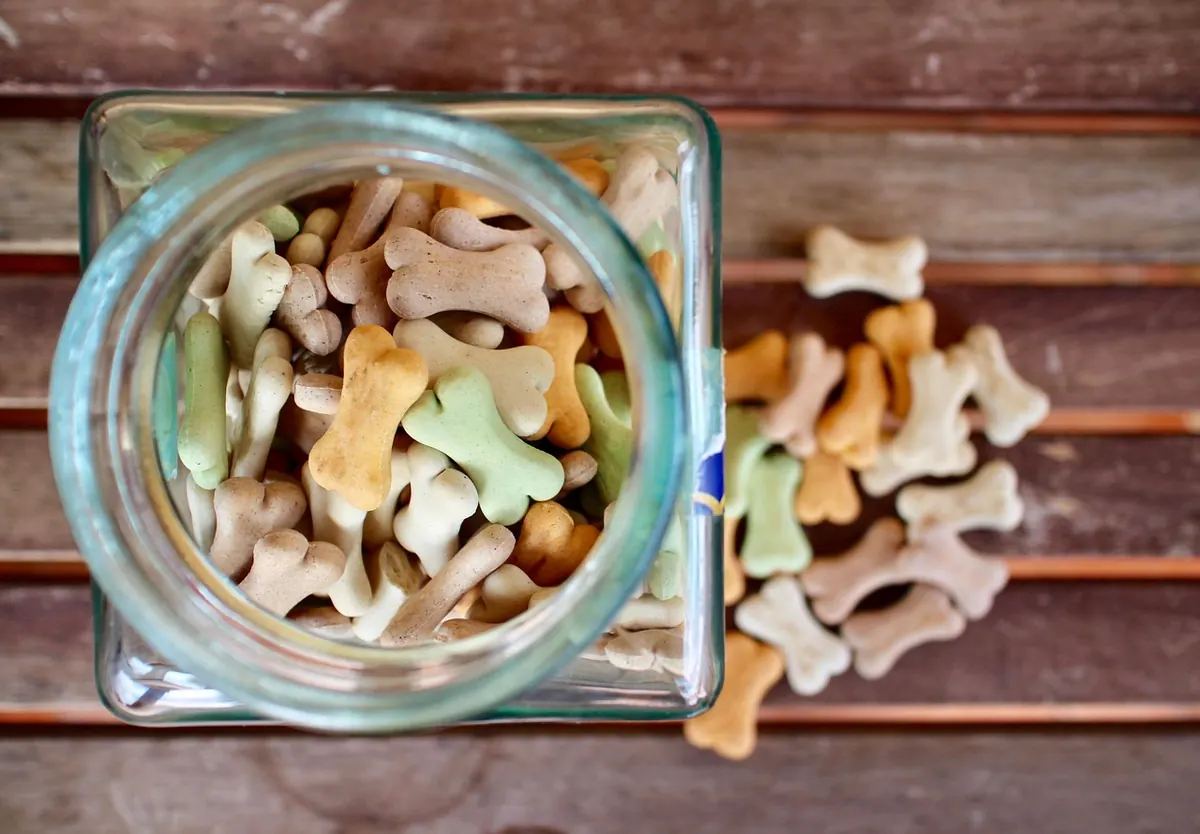
"It's a dog biscuit" is not an ingredient list. Ask what the treat contains and where it came from — house-made in the cafe kitchen, or bought from a bakery or supplier. If it's packaged, ask to see the bag. A cafe that makes its own dog treats should be able to name what's in them without checking.
Ingredients worth asking about specifically, because they show up in dog treats more often than people expect:
- Sweeteners. Xylitol in particular is dangerous for dogs, and it hides in sugar-free syrups, some peanut butters, and "diet" baked goods. Plain sugar, honey, and molasses are not toxic but are best kept minimal.
- Chocolate, coffee, and carob confusion. Carob is often used in dog treats as a chocolate substitute; ask which one it is, and whether the same kitchen handles real chocolate.
- Dairy. Most pup cups are whipped cream. Many dogs handle a small amount fine, and many don't — expect loose stools if yours is lactose-sensitive.
- Nuts, raisins, grapes, onion, and garlic. Macadamia nuts, raisins and grapes, and allium powders are all things you want nowhere near a dog treat. They do occasionally appear in human baked goods offered "just a little piece."
- Salt and fat. A bite of sausage or cheese from a cafe plate is fine for some dogs and a recipe for pancreatitis in others.
If nobody behind the counter can tell you what's in it, that's your answer: skip it.
2. Does This Dog Have Known Allergies or Sensitivities?
If your dog has a diagnosed or suspected allergy — chicken, beef, wheat, dairy, peanut — say so out loud before the treat is handed over, and ask what the safe option is. Don't assume the plain-looking biscuit is the plain one.
Cross-contact matters too. A small bakery that scoops peanut butter cookies and "peanut butter" dog biscuits with the same utensil, or stores both in open jars side by side, is a real risk for a seriously allergic dog. Ask.
And remember that food sensitivities don't always show up as stomach trouble. Itchy paws, recurring ear infections, licking, and hot spots are common signs that something in the diet isn't agreeing. If you're in the middle of an elimination diet to identify a trigger, cafe treats are exactly the wrong place to make an exception — bring your own.
3. How Big Is the Piece, and How Many Have They Had Today?
Most cafe treats are sized for a labrador. A chihuahua or a yorkie does not need a whole bone-shaped biscuit, and asking for it broken in half is completely normal. Ask for the smallest useful piece, then break it again.
The other question is arithmetic. If four people at the table each hand over a treat, that's four treats. If you stopped at a cafe in the morning and another in the afternoon, that's eight. Treats should stay a small share of what your dog eats in a day, and the right amount depends on their size, age, activity, and any conditions they're managing. If you're unsure where that line sits for your dog, your vet is the right person to ask.
4. Texture, Shape, and Temperature: The Physical Risks
Not every problem is an ingredient. Hard biscuits can crack a tooth, especially in older dogs or small breeds. Anything on a stick, a toothpick, or a cocktail pick needs the stick removed before the dog gets near it. Decorative icing and sprinkles are sugar and sometimes colourings that do nothing for a dog. Frozen treats handed over rock-hard can be gulped and lodged; let them soften for a minute. And watch the cup itself — thin paper cups get shredded and swallowed in seconds, and the plastic lining doesn't digest.
5. How Are the Treats Stored and Handled?
This isn't about being fussy. It's a simple question: are the treats kept in a sealed container, or in an open jar on the counter where anyone's hand goes in? Is there a dedicated scoop, or does the same tongs pick up human cookies and dog biscuits? Are the treats fresh, or has that jar been out since last summer?
Ask about the communal water bowl as well. Sharing a bowl is usually fine, but if your dog is unwell, immunocompromised, or recovering from something contagious, bring your own bowl and water.
6. Whose Dog Is It? Permission Before Everything Else
If the dog isn't yours, ask the person holding the leash — every time, even if the dog is clearly begging. There are good reasons for a no: a dog in training, a service dog on duty, a dog on a prescription diet, a senior on medication, a dog whose weight is being managed carefully. Handing food to someone else's dog without asking also teaches them that strangers give out food, which is a habit nobody wants.
If it is your dog, agree on the rules with everyone at the table before you sit down. One person ordering and one person deciding is how dogs end up with three pup cups and a stomach ache.
After the Treat: What to Watch, and When to Call the Vet
Keep half an eye on your dog for the rest of the day. Loose stools, vomiting, gas, excessive scratching, hives, or swelling around the face and muzzle are all worth noting. If you think your dog ate something genuinely toxic — xylitol, chocolate, grapes or raisins, alcohol, medication — don't wait for symptoms. Call your vet or an animal poison helpline straight away and describe what was eaten and how much. Keep your vet's number saved in your phone, not just in a drawer.
A cafe treat should be a small, cheerful thing, not a decision you have to worry about later. Ask the ingredient question, ask the size question, ask the permission question, and the answer is usually yes. When it isn't, a piece of carrot from your own bag works just as well — your dog won't know the difference, and you'll both still get the patio.
Photo: sweetlouise / Pixabay